cloth and culture NOW 21:21 context + collaboration through the surface textural space
transition and influence - the interface between cloth and culture


News

CULTEX | Memory & Touch | Haptic


CULTEX: textile as a cross-cultural language

CULTEX is a development of the project Through the Surface.

Through the Surface paired, in a mentoring exchange, young emerging artists from one country with more established artists from a different country. One of those pairings consisted of the highly respected Japanese artist Machiko Agano and the emerging artist Anniken Amundsen, a Norwegian national who at that time was living and working in the UK.

Since the ending of Through the Surface, Machiko and Anniken have maintained contact and built upon their very successful working relationship, to the extent that 4 years later they felt it would be appropriate to collaborate again. However this time it would be as equal partners, rather than Mentor and Mentee as both are now established artists within a national and international context.

I had also continued to be in close touch with the two and was delighted to be included in the early discussions about a new project. Where the previous project has included artists living in UK and in Japan, CULTEX focuses on those from Norway and Japan.

The artist pairings are:
Anniken Amundsen and Machiko Agano
Gabriella Göransson and Kiyonori Shimada
Eva Schjoelberg and Yuka Kawai

All are contributing web journals.

The exhibition of work created as a result of the exchange will open in Norway in Spring 2009, travel to the UK in 2010 and to Japan in 2011.

To know more about CULTEX and read the artists and curator’s Journals please go to www.cultex.org
Anniken Amundsen
 Eva Schoelberg

Conference – Royal Institute of British Architects, London, 7th May 2008

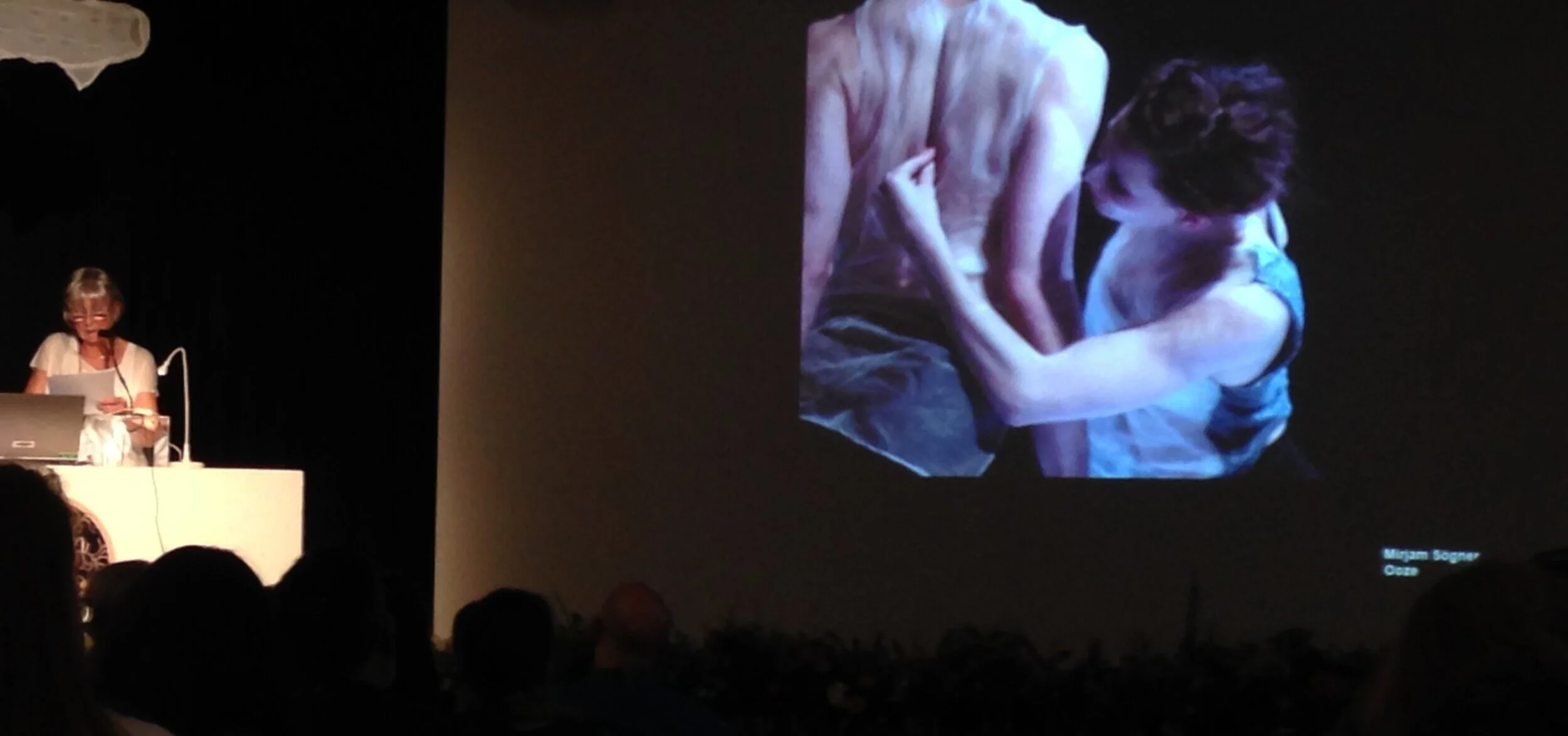
On 7th May 2008 we held the conference ‘Memory and Touch’ in support of the exhibition Haptic – awakening the senses. It was a very interesting day with speakers from many different disciplines, demonstrating the breadth of interest in the importance of touch as a means of communication. As one of the speakers, Professor Masayo Ave, commented: many societies today are touch-starved – always facing the injunction ‘not to touch’. We have made available abstracts from the day see the link from the speakers name below) and are looking at the possibilities of publishing the papers – further announcements will be made here.

Memory and Touch: an exploration of textural communication

“touch cannot be in opposition to itself, can never be perceived as surface or source, but an acknowledgement that actual is mutual – a conjoining of two.”*

As babies we learn to define and refine our relationship with our surroundings through licking, touching, smelling, hearing and seeing, and throughout our lives we continue to experience the world through our senses. Yet once we have acquired verbal language, we rarely acknowledge how much we understand through our textural awareness; there is an intimacy, a privacy surrounding our sensory experiences, their very bodily nature a potential source of embarrassment. The more we attempt to control our environment and our interaction with the physical world through intellectual scrutiny of objects, and deny the fundamental importance of textural experience, the more we risk loosing that level of communication achieved through attention to the senses, for “to touch is also to be touched”**. And as such always creates a dialogue, a communication both before and beyond text.

It is possible to touch colour in a sense, because very bright red will work on expectation and somehow the colour will bring some warmth. Some people see cloth through the sound it makes, the sound when people are walking and the cloth moves against the skin; expensive textiles especially make a more beautiful sound, and that there is very often an erotic connection to the sound of certain textiles. Conference presentations will draw on a wide variety of interpretations, disciplines and experiences, exploring the symbolic, cultural, social and technical aspects of textural communication. Keynote speaker will be the highly influential Japanese designer Kenya Hara, whose exhibition Haptic – awakening the senses, opened at the RIBA Gallery on 7th May.

Venue: Royal Institute of British Architects, Portland Place, London
Date: May 7th 2008                           

Chair:  Vicky Richardson, Editor Blueprint, Media Partner for Conference and Exhibition

Speakers
Kenya Hara, Chief Executive Nippon Design, Chief Designer MUJI, curator of Haptic – awakening of the senses
Professor Masayo Ave, Estonia Academy of Art, Founder of the Centre for Haptic Interface Design, Berlin University of Art, creator of the Haptic dictionary
Robert Zimmer and Professor Janis Jefferies, Goldsmiths Digital Studios, Goldsmiths, University of London
Kate Baker, Belinda Mitchell, School of Architecture and Interior Design University of Portsmouth
June Hill, Curator, writer
Dr Mark Paterson, School of Geography, Archaeology and Earth Resources, University of Exeter, Author: The Senses of Touch: Haptics, Affects and Technologies
Short presentations
Mary Schoeser, Senior Research Fellow, University of the Arts London, curator, writer
Fiona Jane Candy, Senior Lecturer, Department of Design University of Central Lancashire,
Trish Bould and Kathy Oldridge, University of Southampton
Dr Frances Geesin, Reader in Textiles and Materials, University of the Arts London
Lesley Sutton, Artist, project leader Stories of Cloth

Blueprint
Media Partner for Conference and Exhibition

*Chadwick, Helen ‘Lumina Delights’ in ‘Enfleshings’ p69 pub Aperture Foundation 1989.
** Rodaway Paul (1994). Sensuous Geographies: Body, Sense and Place. p41 London. Routledge

Exhibition – RIBA Gallery London & Lighthouse, Glasgow

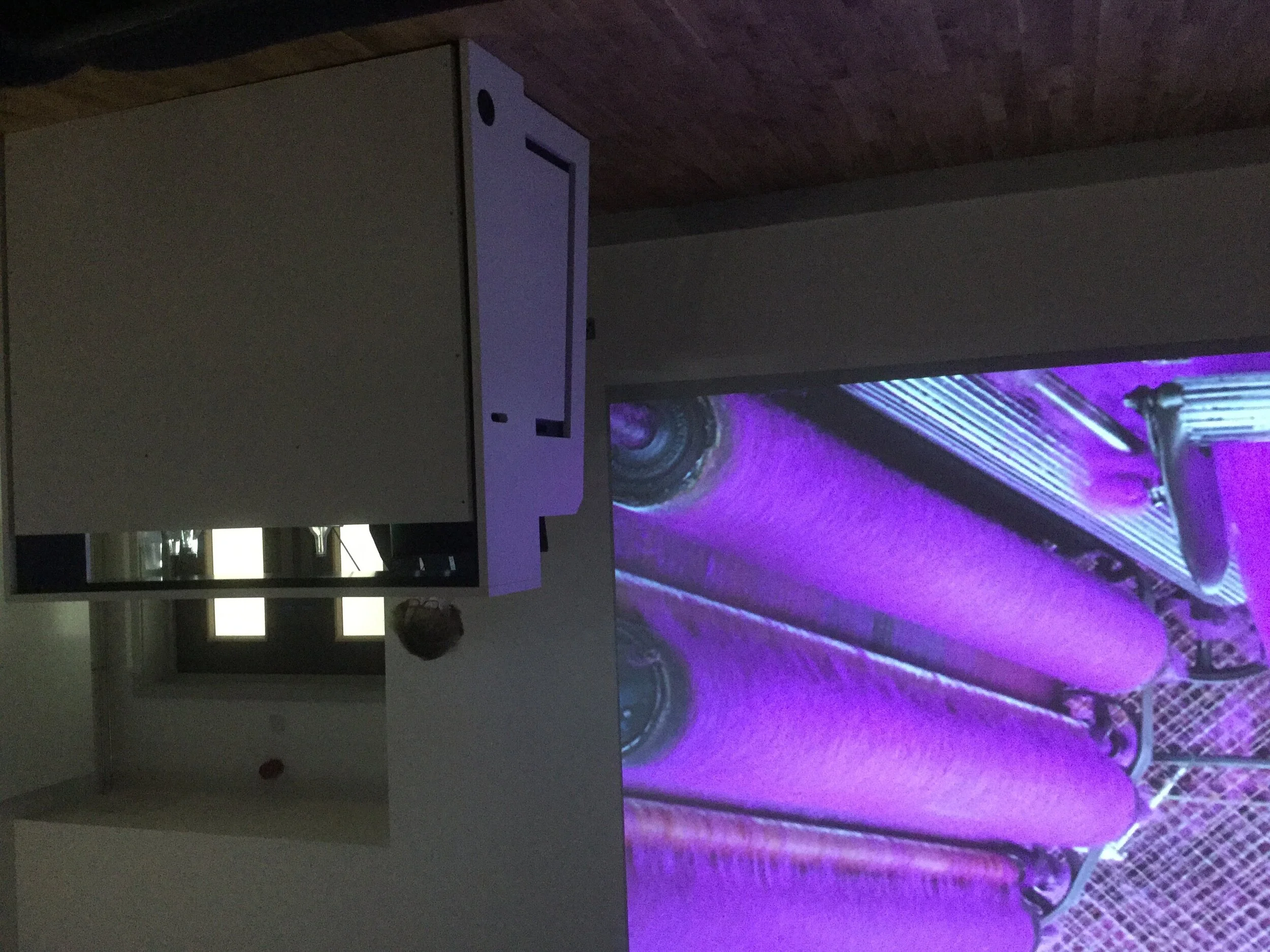
HAPTIC – awakening the senses

A major exhibition curated by the highly influential Japanese designer Kenya Hara, Chief Executive Designer Nippon Design Centre Inc. and MUJI. The exhibition features world famous architects Toyo Ito and Shigeru Ban, plus designers of product, fashion, graphics, textiles, interiors, a traditional Japanese plasterer, an electrical appliance manufacturer and a science and technology journalist.  The exhibitors have investigated the various aspects of sensory perception and translated their observations into surprising and challenging design outcomes, producing an alternative design practice, one that originates in the senses.

The term ‘haptic’ primarily relates to the sense of touch, but can also include all sensory perception. All of the experiences of human perception occur on the membranes of the body. When we choose to activate the sense of sight, the sense of touch is also engaged. As curator Kenya Hara says:
“Without resorting to new materials or abstractionism, we can infer that there is something vital in the domain of the senses. That’s why we can understand the tactile sensation of a scrubbing brush without actually experiencing it.”

Exhibition - The Gallery, University College for the Creative Arts Epsom

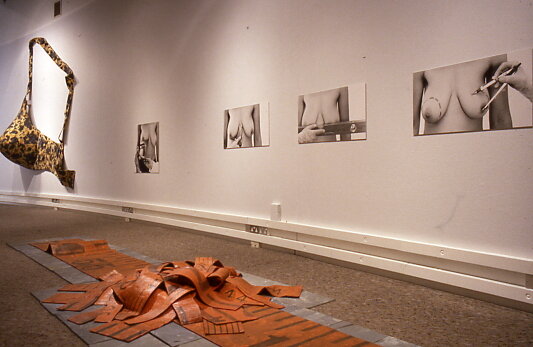
MAKE-DO it HAPTIC - design projects by Masayo Ave 1990-2008

Masayo Ave is one of the participants in ‘Haptic – an awakening of the senses’ at RIBA London and Lighthouse Glasgow. Masayo Ave initially trained as an architect before turning to design. This exhibition is a retrospective of her work, which includes her ground breaking Haptic dictionary created in collaboration with designers and students in Italy, Germany, Holland and Estonia.   

For further information contact Lesley Millar on lmillar@ucreative.ac.uk     

Blueprint
Media Partner for Conference and Exhibition


Haptic 1
Haptic 2
Haptic 3
Haptic 4
Haptic 5


University College for the Creative Arts
 
copyright © Lesley Millar 2006-2008 | sitemap